
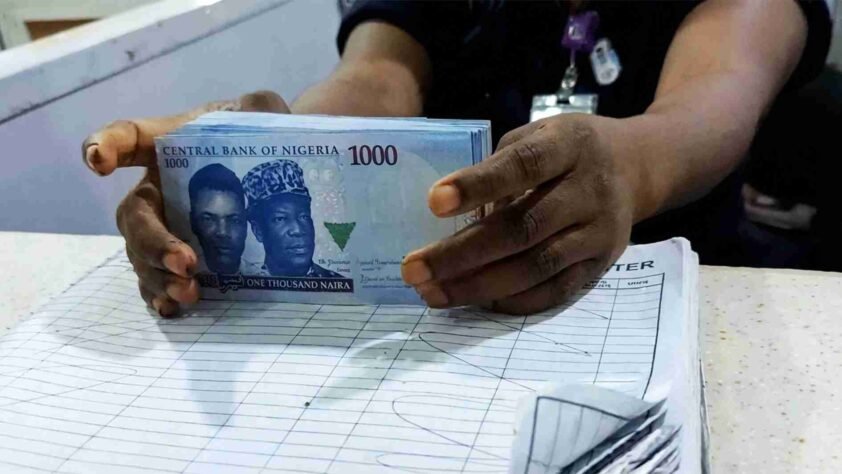
The Nigerian naira strengthened to ₦1,329.43 per US dollar at the Nigerian Foreign Exchange Market (NFEM) on September 1, 2026, from ₦1,332.94 in the previous session, according to Central Bank of Nigeria data.
The currency traded at ₦1,343 on August 26 and around ₦1,337 on August 28 before reaching ₦1,329.43, recording a 1.01 per cent appreciation over the period.
NFEM turnover reached $130.45 million on September 1, up from $105.64 million a day earlier.
Recorded transactions climbed from 118 to 139, while trades took place between ₦1,327 and ₦1,335.50 per dollar during the session.
Across 19 trading days in August, NFEM recorded $14.45 billion in turnover, compared with $12.69 billion in July. The August figure marked a 13.8 per cent monthly increase.
“The naira’s recent appreciation appears to be driven primarily by improved dollar liquidity in the official market,” a Lagos-based financial analyst said.
“The increase in NFEM turnover, together with higher external reserves, points to stronger availability of foreign exchange while demand has remained relatively contained. If these conditions persist, the naira could trade around the ₦1,320–₦1,350 range through September, although stronger dollar demand or weaker inflows could put renewed pressure on the currency.”
Nigeria’s gross external reserves reached $53.806 billion at the end of August.
Reserves stood at $49.96 billion on June 3 and $53.112 billion on August 24, putting the increase at $3.15 billion between June 3 and August 24.
The end-August figure also remained above $53 billion and approached the $53.25 billion recorded in January 2009.
Parallel-market quotes stood at ₦1,400 to ₦1,410 per dollar on September 2.
The gap with the September 1 NFEM rate ranged from ₦70.57 to ₦80.57 per dollar, leaving parallel-market prices 5.3 per cent to 6.1 per cent higher.
At ₦1,329.43, the currency traded ₦20.57 below the ₦1,350 per dollar year-end target cited in earlier market forecasts.