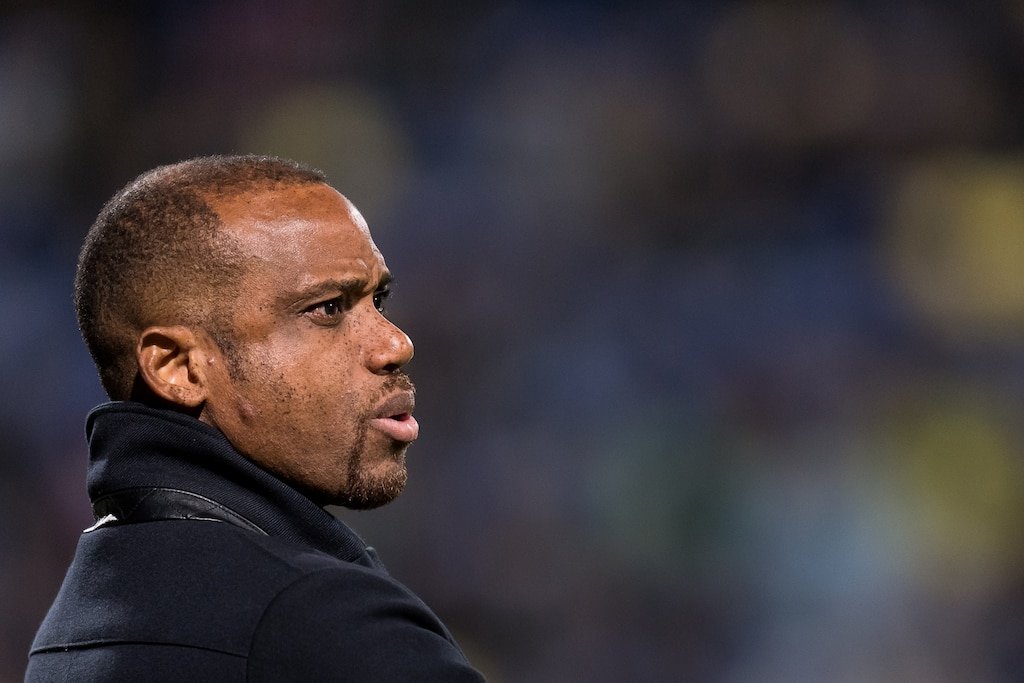
Sunday Ogochukwu Oliseh was born on September 14, 1974, in Abavo, Delta State, Nigeria. He is 51 years old in 2025. Sunday is married to Hafida, a Belgian-Moroccan woman, and they have two children, Denzel and Shanice.
He is widely regarded as one of the best African midfielders of all time. His career spanned over 17 years. One of his most famous moments was at the 1998 World Cup.
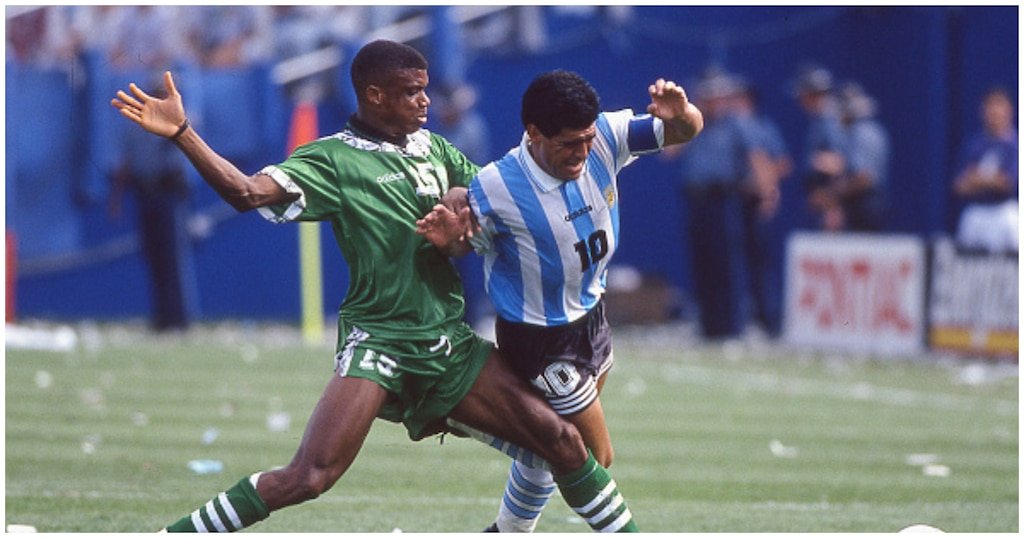
Nigeria played Spain in a group-stage match. Sunday scored a thunderbolt goal from 25 yards. The Spanish goalkeeper, Andoni Zubizarreta, was completely surprised. That goal helped Nigeria secure a 3-2 victory.
Sunday was born into a Catholic family. His father was an accountant, and his mother ran a business. He is the second of six children. There are five boys and one girl. Growing up, he lived in Lawanson, Surulere, Lagos. As a child, he loved football. He played wherever he could.
Early Life and Education

Sunday started primary school at Bright Starr Nursery and Primary School in Ojota. He attended Ajao Estate High School and Methodist Boys High School for secondary education, all in Lagos. He took part in many sports competitions at school. Despite loving football, he was a top student. He graduated among the top three in his class.
His father wanted him to be an accountant. He forbade Sunday from playing football. Sometimes, he even spanked him when he played. Things changed when Sunday earned his first salary from a local club. He gave all the money to his father. His father was shocked and proud. He then gave Sunday full support to pursue football.
Famous Family Members
Sunday comes from a talented family. His brother Churchill Oliseh is a football manager who discovered players like Obafemi Martins. Another brother, Azubuike, played midfield for Ermis Aradippou FC. Egutu, another brother, played midfield for Greek club Olympiakos Laurium FC. Their sister Tessy is a fashion designer. She studied at Middlesex University and runs Tesla Concept Ltd. Her brand won Best Fashion Designer in 2006.
Professional Football Career

Sunday began his professional football career with Julius Berger FC in the late 1980s. He was a defensive midfielder. Oliseh played under coach Joe Erico. He also combined football with schooling.
A Belgian agent, Claude Bissot, invited him for trials in Belgium. Sunday impressed immediately. He signed for RFC Liège. He played 75 matches and scored three goals over four years. Stephen Keshi helped him settle in Belgium.
In 1994, he moved to AC Reggiana in Italy. He played 25 matches and scored one goal in one season. Then he joined FC Köln in Germany. He played 54 games and scored four goals.
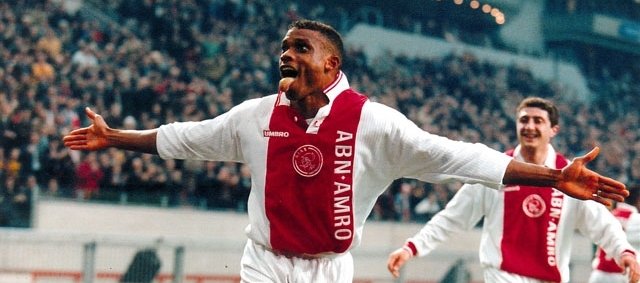
In 1997, Sunday signed for Ajax. He played 54 matches and scored eight goals. He helped Ajax win the Eredivisie and KNVB Cup in the 1997/98 season. In 1999, he joined Juventus in Italy. He played eight games and won the UEFA Intertoto Cup.
In 2000, Sunday moved to Borussia Dortmund in Germany. He played 53 matches and scored one goal. In 2003, he was loaned to VfL Bochum. He played 32 matches and scored once. He was later sacked for headbutting a teammate, Vahid Hashemian, over racial remarks.
His final club was KRC Genk in Belgium. At 31, in 2006, he retired from professional football after playing a half-season. Sunday left a lasting mark on both national and international football. He is remembered for his confidence, technique, and skill.
Club Career Statistics
| Club | Years | League Appearances | Goals | Notes |
|---|---|---|---|---|
| Julius Berger | 1989–1990 | – | – | Nigerian club, start of career |
| RFC Liège | 1990–1994 | 75 | 3 | Belgium, helped him settle in Europe |
| AC Reggiana | 1994–1995 | 29 | 1 | Italy, one season stint |
| FC Köln | 1995–1997 | 54 | 4 | Germany, regular starter |
| Ajax | 1997–1999 | 54 | 8 | Netherlands, won Eredivisie & KNVB Cup |
| Juventus | 1999–2000 | 8 | 0 | Italy, UEFA Intertoto Cup winner |
| Borussia Dortmund | 2000–2004 | 53 | 1 | Germany, sacked after incident with teammate |
| VfL Bochum (loan) | 2003–2004 | 32 | 1 | Germany, loan period |
| KRC Genk | 2005–2006 | 16 | 0 | Belgium, retired after half-season |
Total Club Appearances: 321
Total Club Goals: 18
International Career

Sunday had an impressive career with the Nigerian national team. He played 55 matches and scored four goals. Oliseh played in the 1994 and 1998 FIFA World Cups. He was part of Nigeria’s Olympic gold medal-winning team in 1996.
In 1998, CAF voted him Africa’s third-best footballer. The World Cup goal against Spain remains iconic. He captained Nigeria during the 2002 African Cup of Nations. However, he missed the 2002 World Cup due to disciplinary reasons.
| Year | National Team | Appearances | Goals |
|---|---|---|---|
| 1993 | Nigeria | 1 | 0 |
| 1994 | Nigeria | 12 | 0 |
| 1995 | Nigeria | 3 | 1 |
| 1996 | Nigeria | 1 | 0 |
| 1997 | Nigeria | 4 | 1 |
| 1998 | Nigeria | 7 | 1 |
| 1999 | Nigeria | 3 | 0 |
| 2000 | Nigeria | 10 | 1 |
| 2001 | Nigeria | 7 | 0 |
| 2002 | Nigeria | 7 | 0 |
Total International Appearances: 55
Total International Goals: 4
Playing Style

Sunday was a defensive midfielder. He was strong physically but also technically gifted. The Nigerian international focused on ball retention and passing. He could control the midfield like very few players could.
Transition to Coaching
After retiring, Sunday moved to England to study coaching. He also earned a Diploma in Business Management. Sunday worked as a sports consultant for German TV, CNN and contributed to FIFA’s technical studies.
He started coaching youth teams in Belgium in 2007. He coached the U19 team and later became chief coach at Verviers in 2008–2009. In 2014–2015, he managed RCS VISE in Belgium’s third division.
Nigeria National Team Coaching

In 2015, Sunday became head coach of the Nigerian national team. He replaced Stephen Keshi. Under him, Nigeria played 14 games. They scored 19 goals, conceded six, and lost only two matches. He helped Nigeria qualify for the CHAN tournament in Rwanda and for the 2018 World Cup group stage.
At his unveiling, he promised not to bring in players outside the first division. He stated he would give 150% service. However, he resigned on February 26, 2016, due to unpaid wages, contract violations, and lack of support for himself and his assistant.
Other Managerial Roles
After Nigeria, Sunday managed Fortuna Sittard from December 2016 to February 2018. He was awarded Best Coach in the Dutch Jupiler League in 2017. He resigned from SV 19 Straelen in Germany in 2022 after just two months due to poor results.
| Team | Years | Position | Notes |
|---|---|---|---|
| Eupen | 2007 | Sports Director | Belgium |
| Verviers U19 & Senior Team | 2008–2009 | Coach | Belgium, youth and senior team |
| RCS VISE | 2014–2015 | Chief Coach & Manager | Belgium 3rd Division |
| Nigeria | 2015–2016 | Head Coach | Super Eagles, 14 games, 2 losses |
| Fortuna Sittard | 2016–2018 | Manager | Netherlands, Best Coach award 2017 |
| SV 19 Straelen | 2022 | Head Coach | Germany, resigned after 2 months |
Wife, family, Children

Sunday and Hafida have been married for over 20 years. They met during his early career days. They have two children, Denzel and Shanice. Sunday credits his wife for supporting him, especially during his busy football years. He keeps his family life private.

Sunday speaks three foreign languages: Dutch, French, and Italian. He is confident and outspoken. He has turned down opportunities to be an assistant coach in Nigeria, insisting on doing things his way.
Sunday Oliseh Net Worth
Sunday’s net worth is around ₦150 million. He earns from coaching in Nigeria, Belgium, and other countries. International coaching salaries are six-figure earnings. He owns three houses—two in Lagos and one in Delta State. He drives a 2016 Nissan Altima, a 2015 Jeep Liberty, and a 2018 Toyota Highlander.
FAQ: Sunday Oliseh
Who is Sunday Oliseh?
Sunday Oliseh is a retired Nigerian professional footballer and former manager. He played as a defensive midfielder and is considered one of Africa’s best midfielders.
When and where was Sunday Oliseh born?
He was born on September 14, 1974, in Abavo, Delta State, Nigeria.
What is Sunday Oliseh’s football career history?
He played for clubs including Julius Berger, RFC Liège, AC Reggiana, FC Köln, Ajax, Juventus, Borussia Dortmund, VfL Bochum (loan), and KRC Genk. Internationally, he earned 55 caps for Nigeria, played in the 1994 and 1998 World Cups, and won Olympic gold in 1996.
How did Sunday Oliseh transition into coaching?
After retiring in 2006, he studied coaching and business management in England. He started coaching youth teams in Belgium, later managed RCS VISE, the Nigerian national team, Fortuna Sittard, and SV 19 Straelen.
Who is Sunday Oliseh’s wife and how many children does he have?
His wife is Hafida, a Belgian-Moroccan woman. They have two children, a son named Denzel and a daughter named Shanice.
What is Sunday Oliseh’s net worth and main income sources?
His net worth is around ₦150 million. He earns mainly from coaching in Nigeria, Belgium, and other countries.
What salary does Sunday Oliseh earn currently or as a coach?
As a coach internationally, he earns a six-figure salary. In Belgium, an average coaching salary is about ₦5 million per month, excluding benefits.
What properties or house does Sunday Oliseh own?
He owns three houses: two in Lagos and one in Delta State. All are two-storey buildings.
How old is Sunday Oliseh?
He is 51 years old in 2025.